
Black & White Kitchen Decor: 5 Easy Pattern Mixing Rules
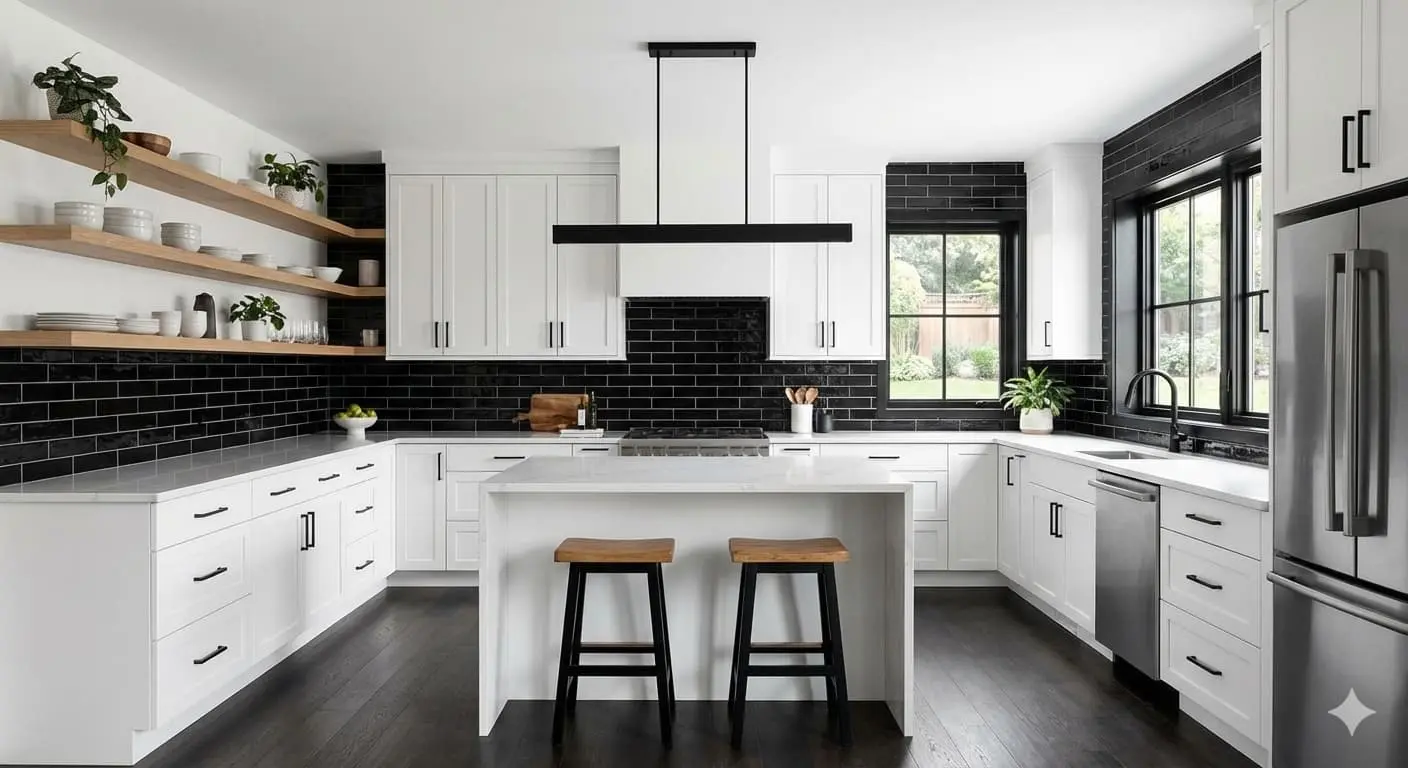
There’s a reason you keep coming back to black and white kitchens. No matter how trends shift, this classic color combination always feels fresh, elegant, and dependable. Yet many homeowners hesitate when it comes to mixing patterns in a monochrome space. You may love the idea of bold tiles or graphic floors, but fear ending up with a kitchen that feels busy or unbalanced.
The truth is simple: black & white kitchen decor becomes powerful when patterns are used with intention. When you understand a few core rules, pattern mixing stops being risky and starts feeling creative. This guide walks you through five easy, practical rules that help you design a kitchen that looks polished, cohesive, and ready for real life—not just photos.
Whether you’re planning a full renovation or updating a few elements, these principles help you make confident choices that last.
Table of Contents
Why Black & White Kitchen Decor Never Goes Out of Style
Black and white is more than a color scheme—it’s a design foundation. This contrast works because it mirrors how the eye naturally reads space: light areas open a room, while darker tones ground it.
In black & white kitchen decor, this balance creates:
- Visual clarity
- Strong architectural definition
- Flexibility to evolve over time
Unlike colorful kitchens that can feel dated quickly, black and white adapts. You can introduce new textures, materials, or patterns without reworking the entire space. This makes it especially appealing if you want a kitchen that holds value, both aesthetically and financially.
From a transactional perspective, black and white kitchens also appeal to a wider audience, making them a smart investment when resale matters.
Understanding Pattern Mixing in Black & White Kitchen Decor
What Counts as a Pattern in Kitchen Design?
Patterns go far beyond wallpaper. In a kitchen, patterns appear in places you may not immediately notice:
- Floor tiles (checkerboard, herringbone, basketweave)
- Backsplashes (subway tile layouts, geometric designs)
- Rugs and runners
- Cabinet paneling
- Countertop veining
- Open shelving accessories
In black & white kitchen decor, patterns stand out more clearly because color isn’t distracting the eye. This is why thoughtful mixing is essential.
Why Pattern Mixing Feels Intimidating (But Doesn’t Have to Be)
Many people associate patterns with clutter. The fear usually comes from:
- Using too many bold designs at once
- Ignoring scale differences
- Forgetting to anchor patterns with solid surfaces
Once you follow a structured approach, pattern mixing becomes predictable and safe—even enjoyable.
Rule #1 – Start With One Dominant Pattern
Every successful kitchen needs a visual anchor. In black & white kitchen decor, this anchor is often your strongest pattern.
How to Choose Your Dominant Pattern
Your dominant pattern should:
- Cover the largest surface area
- Set the tone for the entire kitchen
- Feel timeless rather than trendy
Common choices include:
- Checkerboard or patterned tile floors
- Bold backsplash designs
- Graphic wallpaper in a breakfast nook
Tip: Choose only one dominant pattern. Everything else in the kitchen should support it, not compete with it.
This approach gives your space direction and prevents visual confusion.
Rule #2 – Mix Pattern Scales for Balance
One of the most overlooked principles in black & white kitchen decor is scale. Patterns should vary in size to create rhythm and movement.
Understanding Pattern Scale
- Large-scale patterns draw attention and define space
- Medium-scale patterns add interest without overpowering
- Small-scale patterns provide texture and subtle detail
How to Apply This Rule
A balanced kitchen might include:
- Large checkerboard floor tiles
- Medium subway tile backsplash in a herringbone layout
- Small patterned rug or textiles
Mixing scales ensures your eye has places to rest while still enjoying visual interest.
Rule #3 – Use Solid Black or White as Breathing Space
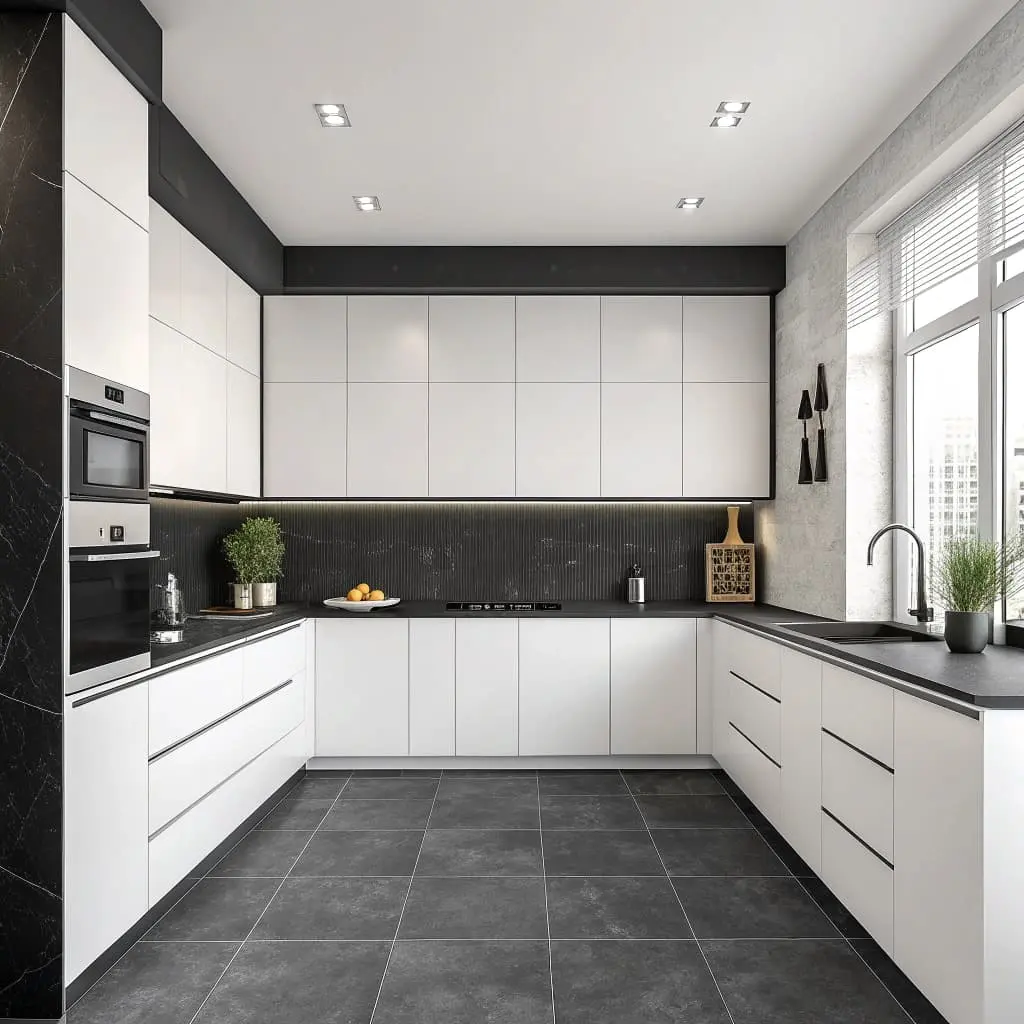
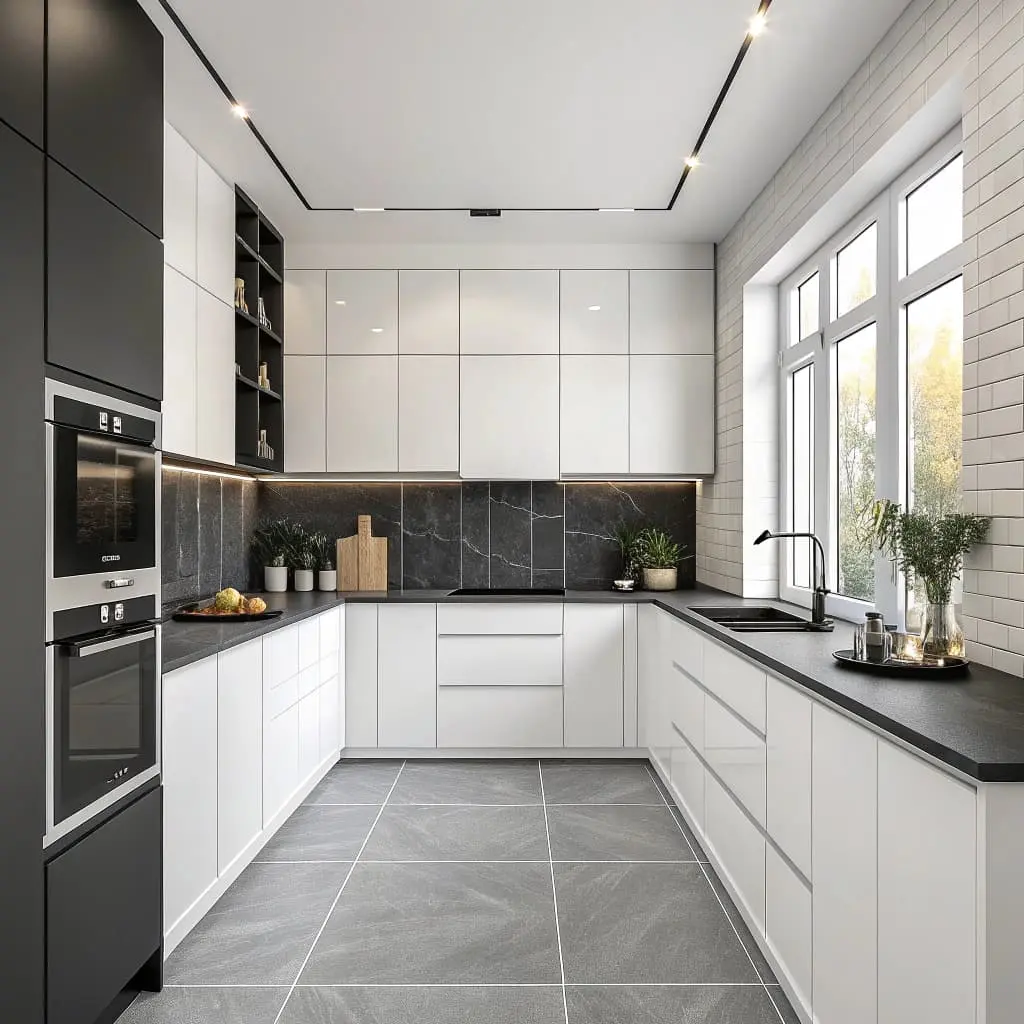
Patterns need room to exist. Without solid surfaces, even beautiful designs can feel overwhelming.
In black & white kitchen decor, solid areas act as visual pauses.
Where to Add Breathing Space
- Flat-panel cabinets in solid white or black
- Simple quartz or stone countertops
- Plain painted walls
These areas:
- Highlight your chosen patterns
- Create a cleaner, more intentional look
- Make the kitchen easier to live in daily
From a practical standpoint, solid finishes are also easier to maintain and keep looking fresh.
Rule #4 – Repeat Patterns for a Cohesive Look
Repetition is what turns individual elements into a complete design story.
Why Repetition Matters
When patterns appear only once, they feel accidental. When repeated thoughtfully, they feel planned.
Ways to Repeat Patterns Subtly
- Echo floor tile geometry in cabinet hardware
- Match backsplash lines with shelf brackets
- Repeat stripes or grids in rugs and seat cushions
In black & white kitchen decor, repetition builds harmony without needing more color.
Rule #5 – Add Warmth to Soften High Contrast
While contrast is the strength of black and white, warmth is what makes the kitchen inviting.
Materials That Balance Black & White Kitchen Decor
- Natural wood (oak, walnut, maple)
- Brass or brushed gold hardware
- Matte black fixtures with soft finishes
- Linen, cotton, or woven textiles
These materials soften the sharp contrast and make the space feel lived-in rather than stark.
From a buying perspective, adding warmth also allows you to update your kitchen over time without major renovations.
Styling Checklist for Black & White Kitchen Decor
| Kitchen Element | Pattern Type | Purpose |
|---|---|---|
| Flooring | Large-scale | Establishes foundation |
| Backsplash | Medium-scale | Creates focal point |
| Rug/Textiles | Small-scale | Adds comfort |
| Cabinets | Solid color | Visual balance |
| Hardware | Repeating detail | Cohesion |
Use this checklist as a practical guide when shopping or planning upgrades.
Pattern Mixing “Recipe” Table
| Ingredient | Quantity | Function |
|---|---|---|
| Black base | 1 key area | Depth and structure |
| White base | 1–2 areas | Light and openness |
| Patterns | 2–3 total | Visual interest |
| Natural textures | As needed | Warmth and comfort |
Think of pattern mixing like cooking—too much of one ingredient ruins the balance.
Common Mistakes to Avoid in Black & White Kitchen Decor
Avoiding these pitfalls saves time, money, and frustration:
- Using too many bold patterns at once
- Ignoring scale differences
- Forgetting texture entirely
- Overusing high-gloss finishes
- Treating decor as purely visual instead of functional
Good design always considers how you live, cook, and move through the space.
FAQ: Black & White Kitchen Decor
Is black & white kitchen decor suitable for small kitchens?
Yes, black & white kitchen decor works exceptionally well in small kitchens when designed thoughtfully. Allowing white to dominate walls, cabinetry, or countertops helps reflect light and visually expand the space. When patterns are scaled correctly and used sparingly, they add interest without crowding the room, making even compact kitchens feel brighter, cleaner, and more open.
How many patterns should you use in black & white kitchen decor?
In black & white kitchen decor, using two to three patterns is the sweet spot. This amount creates visual depth and character while maintaining balance. Limiting the number of patterns prevents the space from feeling chaotic and ensures each design element complements the others instead of competing for attention.
Can black & white kitchen decor feel warm and welcoming?
Absolutely. Black & white kitchen decor becomes warm and inviting when softened with natural materials and textures. Elements like wood accents, warm-toned metals, and textured fabrics balance the strong contrast, helping the kitchen feel comfortable, livable, and far from stark.
Is black & white kitchen decor a good investment?
Yes, black & white kitchen decor is a smart long-term investment. Its timeless appeal attracts a wide range of tastes, it doesn’t age quickly, and it adapts easily to new trends through small updates. This flexibility makes it both visually enduring and financially practical for the future.
Conclusion: Confidence Is the Final Design Rule
Pattern mixing doesn’t require professional training—it requires clarity. When you follow these five rules, black & white kitchen decor becomes structured, flexible, and timeless. You gain the freedom to experiment without risking visual chaos.
Start small. Update one surface. Test one pattern. Each step builds confidence and brings you closer to a kitchen that reflects both style and function.
If you’re planning a kitchen update, use these rules as your buying guide. Save this article, share it for inspiration, and begin with one intentional change today—because the best kitchens aren’t just designed, they’re lived in.