
Living Room Decoration: 8 Best Stylish & Cozy Ideas
Did you know a 2023 Houzz study found that the living room is the most frequently renovated space in a home, yet also the room where homeowners report the highest dissatisfaction with style and functionality? The disconnect is real. We want a space that wows guests and feels like a personal sanctuary, but often end up with a room that’s either too stiff or too messy. The solution isn’t a full, expensive overhaul. Upgrade your living room decoration with 8 stylish and cozy ideas that instantly make your space warm, modern, and inviting. It’s about strategic choices that blend aesthetics with comfort, creating a room that truly works for your life.
Key Elements & Materials for a Cozy-Chic Living Room
To build this inviting atmosphere, focus on a curated toolkit of elements. Think in layers: foundation, texture, light, and life.
- Foundation: A sturdy, well-proportioned sofa is non-negotiable in effective Living Room Decoration. Consider a deep-seated, low-profile sectional for large spaces or a sleek, tailored sofa with tight back cushions for smaller rooms. A statement armchair in a contrasting fabric or shape adds instant personality.
- Textiles & Texture: This is your secret weapon in effective Living Room Decoration. Layer a chunky knit throw on the sofa, add a velvet pillow for luxury, a linen one for effortless cool, and a woven basket for natural texture. Rugs are foundational—a large, plush rug (your sofa’s front legs should sit on it) grounds the entire seating area.
- Textiles & Texture: This is your secret weapon in Living Room Decoration. Layer a chunky knit throw on the sofa, add a velvet pillow for luxury, a linen one for effortless cool, and a woven basket for natural texture. Rugs are foundational—a large, plush rug (your sofa’s front legs should sit on it) grounds the entire seating area.
- Lighting: Ditch the single overhead light. Create a trio: Ambient (a floor lamp in a corner), Task (a reading lamp by the chair), and Accent (a slim LED behind artwork or a candle cluster on the coffee table). Warm white bulbs (2700K-3000K) are essential for coziness.
- Walls & Art: Move beyond flat paint. Consider a feature wall with subtle grasscloth wallpaper, a warm-toned paint like terracotta or deep green, or a gallery wall with varied frame sizes and mixed media (photos, prints, small mirrors).
- Natural Elements: Incorporate at least two natural materials: wood (through a side table or floating shelves), stone (a marble tray), rattan (a pendant light or mirror frame), or plenty of living plants (a fiddle leaf fig or a low-maintenance snake plant).
Alternatives: Hate a bulky sofa? Try a pair of chaise lounges or a deep, upholstered ottoman with floor cushions. If you rent and can’t paint, use large, beautiful tapestries or canvas prints as temporary feature walls.
Time & Effort: A Phased Approach
The beauty of these ideas is scalability. You can achieve a significant impact with minimal time and budget.
- Quick Win (Under 2 Hours & Minimal Cost): Rearrange furniture to create a conversation area, swap out throw pillows and blankets, add a floor lamp to a dark corner, and style your coffee table with a stack of books, a tray, and a plant—simple actions that significantly improve Living Room Decoration.
- Weekend Project (1-2 Days & Moderate Budget): Install floating shelves, hang a gallery wall, change all lighting to warm bulbs, add a large area rug, and invest in one key textile like a high-quality throw—steps commonly used in effective Living Room Decoration.
- Full Refresh (Multiple Weekends & Investment): Replace the main sofa, add built-in shelving, install a new lighting scheme with dimmers, or reupholster a favorite armchair. This requires planning and a larger budget but transforms the room’s bones, which is the foundation of high-impact Living Room Decoration.
Step-by-Step Design Guide: Building Your Inviting Space
Step 1: Define Your Seating “Island”
Forget pushing all furniture against walls. Pull your sofa and chairs into a distinct grouping, ideally forming a U or O shape, which is a key principle in effective Living Room Decoration. Ensure the distance between seats is 6–9 feet for easy conversation. Anchor this island with your area rug, ensuring at least the front legs of all major pieces sit on it.
Step 2: Master the Lighting Layers
Place a powerful floor lamp (with a 100W+ equivalent bulb) behind your main reading chair, which is a smart move in Living Room Decoration. Add a table lamp on a side table. Finally, introduce “mood” lighting: a dimmable arc lamp over the sofa, or LED string lights tucked into bookshelves. Use a smart plug to control them effortlessly.
Step 3: The Texture Trio Rule
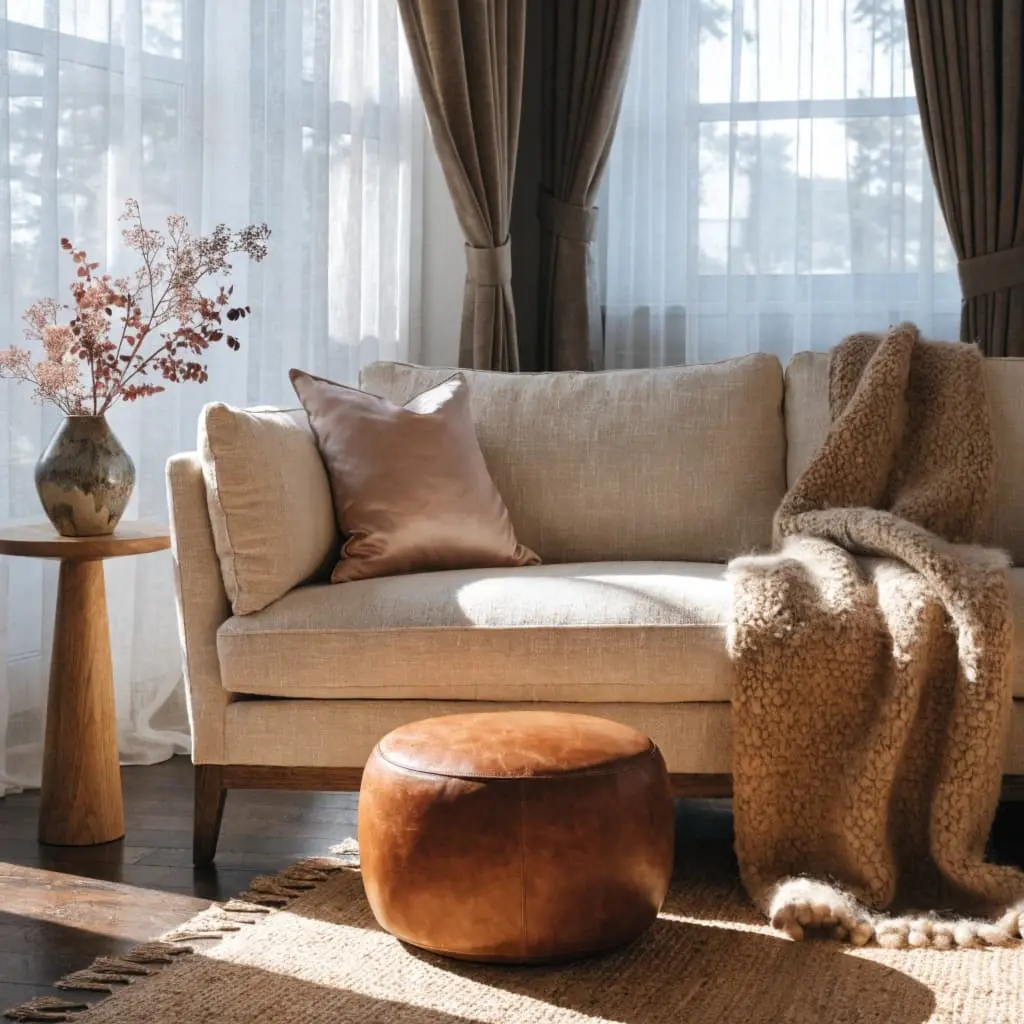
For every major furniture piece (sofa, armchair), add at least three different textures, which is a core principle in refined Living Room Decoration. Example on a linen sofa: a nubby wool throw, a sleek silk pillow, and a leather ottoman. This tactile richness instantly feels luxurious and cozy.
Step 4: Scale Art Correctly
A common mistake is tiny art. As a rule, your artwork or mirror above a sofa should be at least two-thirds the width of the sofa itself, which is a key guideline in balanced Living Room Decoration. For large walls, use a triptych or a large-scale canvas. Hang the center 5–6 feet from the floor.
Step 5: The “Clutter-Block” Strategy
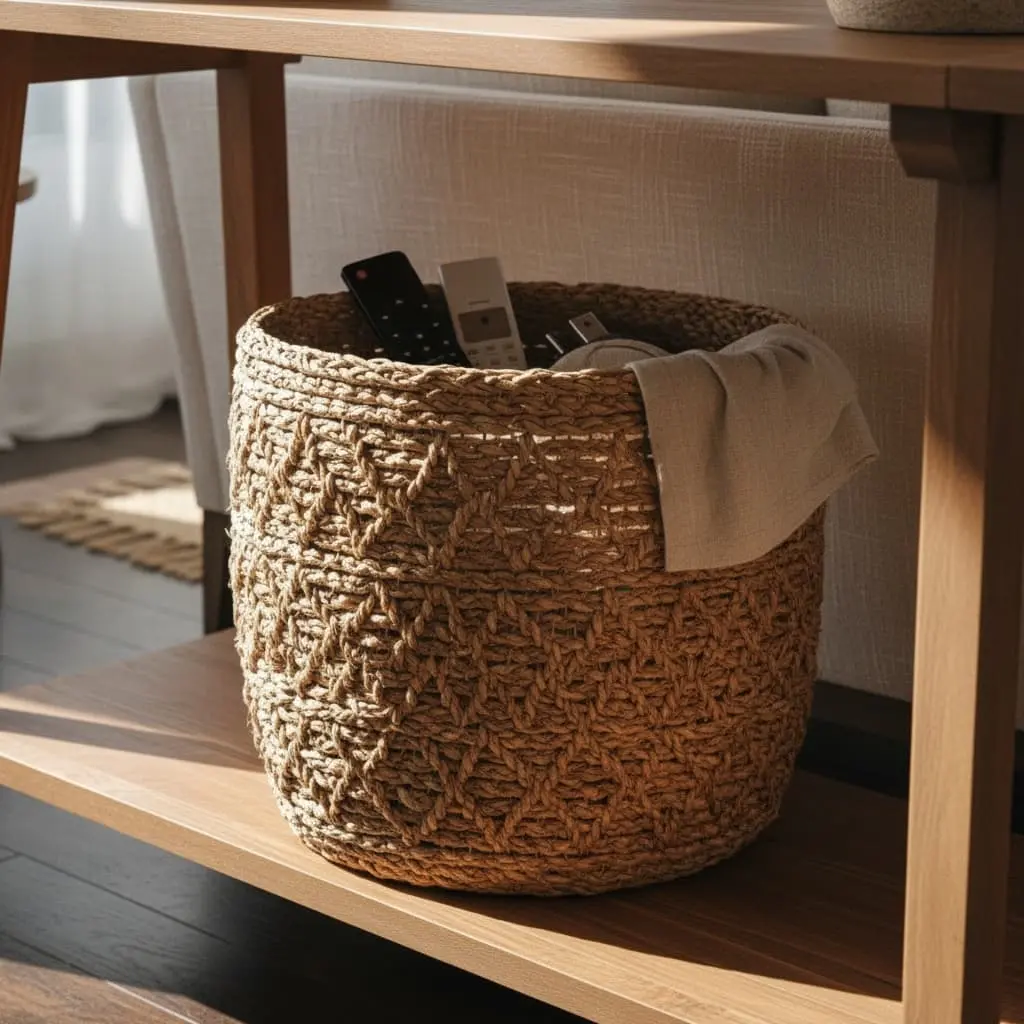
Prevent surface clutter by designating “clutter-blocks”—beautiful baskets on shelves for remote controls, a decorative bowl on the console for keys, and a lidded box for blankets, which is a smart approach in organized Living Room Decoration. Style visible surfaces with the “rule of three”: a vase, a book, and a small sculptural object.
Design Insights & Benefits: Why These Ideas Work
These strategies are rooted in core interior design principles. Layered lighting directly impacts our circadian rhythm and mood; warm light signals relaxation. Furniture grouping creates defined “zones,” which our brains perceive as organized and spacious, even in small areas (a key principle in small space design). Texture variety provides sensory stimulation that flat, uniform spaces lack, making a room feel more “lived-in” and psychologically comforting. The strategic use of natural materials (biophilic design) has been proven to reduce stress and improve air quality. A well-decorated living room isn’t just pretty; it’s an active contributor to your home’s well-being.
Alternative Styles & Budget Options
- Modern Minimalist: Stick to a monochromatic palette (whites, grays, beiges) with one bold accent color (e.g., a single cobalt blue armchair). Choose furniture with clean lines and hidden storage. Use materials like polished concrete, glass, and light wood.
- Budget-Conscious / Renter-Friendly: Focus on textiles and lighting. Buy the best sofa you can afford second-hand and reupholster. Use peel-and-stick wallpaper on one wall. Invest in high-quality, affordable pillows from stores like Target or HomeGoods. Use large, affordable area rugs from IKEA or Wayfair.
- Small Space Solution: Use a loveseat instead of a sofa. Add vertical storage with tall, narrow shelves. Choose furniture with legs (sofa, coffee table) to create a sense of airiness. Mount TVs on the wall and use a slim console. A large mirror opposite a window doubles the light and visual space.
- Luxury / Classic: Incorporate a tufted sofa, a Persian-style rug, heavy drapery, and brass or marble accents. Layer more formal textiles like damask pillows and a cashmere throw. Art should be classic oils or gilded mirrors.
Styling & Arrangement Tips: The Final 10%
- Float Your Furniture: As mentioned, avoid the “wall hug.” Create conversation pits.
- Vary Heights: Use a mix of low coffee tables, standard-height side tables (28-30″), and taller floor lamps to create visual rhythm.
- Let It Breathe: Don’t fill every surface. Negative space is as important as the objects. Ensure clear pathways (at least 30 inches) around the seating area.
- Coffee Table Styling: Use a tray to corral items. Layer objects: a stack of books (horizontal and vertical), a low-base floral arrangement or succulent, and a personal object (a vintage binoculars, a ceramic Bowl).
- Balance Scale: A massive sofa needs a substantial coffee table and a large piece of art. A delicate chair needs a delicate side table. Avoid one giant object with tiny ones.
Common Mistakes to Avoid
- Matching Everything: A “themed” room from one collection feels sterile and dated. Mix eras and styles.
- Poor Rug Size: A rug that’s too small “shrinks” the space. It should anchor the seating group.
- Neglecting the Fifth Wall: Forgetting the ceiling. Paint it a color 1-2 shades lighter than the walls for coziness, or add a subtle textured wallpaper.
- All Task Lighting: No overhead lights on dimmers! This creates a harsh, institutional feel.
- Pushing All Furniture Against Walls: This is the #1 mistake in large living rooms. It creates a cavernous, awkward space.
Maintenance & Longevity Tips
- Rotate Textiles: Swap pillow covers and throws seasonally to prevent uneven sun fading.
- Vacuum Regularly: Use a soft brush attachment on upholstery weekly to remove dust that breaks down fibers.
- Protect Surfaces: Use coasters on wood and stone. Apply a fabric protector spray to sofas and chairs.
- Care for Plants: Wipe leaves monthly to keep them dust-free and photosynthesizing efficiently.
- Deep Clean Annually: professionally clean rugs and major upholstery every 12-18 months. This is an investment in your home’s value and air quality.
Conclusion: Your Invitation to Cozy
Upgrading your living room decoration isn’t about perfection; it’s about intention. By layering texture, rethinking your lighting, and arranging for connection, you build a room that genuinely supports your life. Start with one idea this weekend—perhaps just the lighting swap or a new rug. Feel the difference it makes. Then layer in another. Your stylish, cozy, and utterly inviting living room is a series of thoughtful choices, not a single extravagant purchase. Now, go create a space you never want to leave.
FAQs
Q: How can I make my living room feel bigger without moving walls?
A: Use a large, light-colored rug to define the seating area, which is a core strategy in effective Living Room Decoration. Hang curtains high and wide (to the ceiling, 12–18″ outside the window frame). Choose furniture with visible legs. Add a large mirror to reflect light. Keep the floor plan open and avoid oversized, clunky furniture.
Q: What’s the most important piece to invest in for a living room?
A: The sofa is the foundation of any effective Living Room Decoration. It’s the largest, most used, and hardest-to-replace item. Invest in a quality frame (solid wood or metal), durable fabric (performance fabrics like Sunbrella are great for families), and comfortable cushions (high-density foam).
Q: How do I choose the right size coffee table?
A: The table should be about two-thirds the length of your sofa, which is an important guideline in balanced Living Room Decoration. There should be 18 inches of clearance between the sofa and coffee table for legroom, and at least 12 inches between the table and any adjacent chairs. The height should be equal to or 1–2 inches lower than your sofa seat.
Q: My living room is dark and north-facing. How do I add warmth?
A: Use warm white LED bulbs (2700K) everywhere, which is a foundational tip in effective Living Room Decoration. Add multiple light sources. Incorporate warm-toned textiles like mustard yellows, terracotta, and burnt orange in pillows and throws. Use light, reflective surfaces like a glossy white coffee table or a large mirror. Add warm wood tones through furniture and accessories.
Q: How often should I update my living room decor?
A: Major pieces (sofa, chairs, rug) should last 7–10 years with proper care, which is an important consideration in long-term Living Room Decoration. Refresh smaller items seasonally: swap out throw pillows and throws for seasonal colors/textures. Rotate art and accessories every year or two to keep the space feeling current without a major spend.